


Acoustic Piano vs Digital Piano
A family often reaches the same point after a few months of lessons: the keyboard that seemed perfectly adequate at the start no longer feels quite enough. The question then becomes more serious - acoustic piano vs digital piano, and which one will genuinely support musical progress, daily use and long-term enjoyment.
There is no single correct answer, because the right piano depends on who is playing, how the instrument will be used and what matters most in the home or teaching space. What does matter is understanding the difference properly. A piano is not just furniture, nor simply a sound source. It is a mechanical and musical partner, and the choice affects touch, tone, discipline, maintenance and even how often someone wants to sit down and play.
Acoustic piano vs digital piano: the real difference
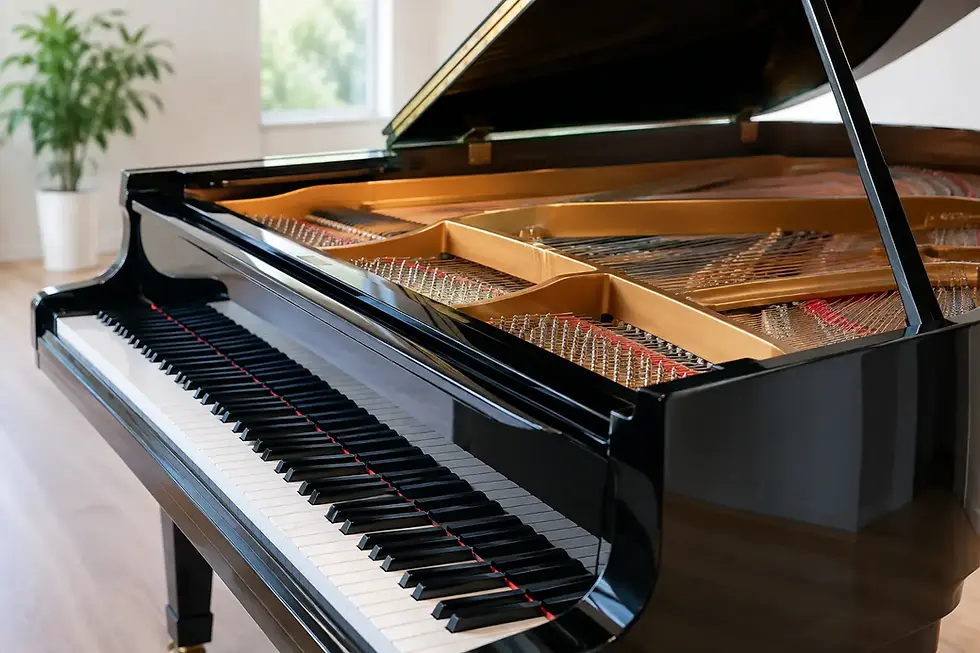
An acoustic piano creates sound through hammers striking strings. Every note is the result of a physical mechanism, with natural variation in tone and response depending on how the key is played. That is why a well-prepared acoustic instrument feels alive under the fingers. It rewards control, exposes weakness and allows a player to shape sound in a way that is difficult to imitate fully.
A digital piano, by contrast, produces its sound electronically. Modern instruments can be very convincing, particularly through headphones or built-in speakers designed for home use. Many now offer graded key action, pedal simulation and a respectable sense of weight. For some households, that can be more than sufficient. For others, especially where a pupil is developing serious technique, the difference remains noticeable.
The question is not whether digital pianos are useful. They are. The question is whether they deliver what a particular player needs from the instrument over time.
Touch and technique matter more than many buyers expect
For a beginner, touch may seem like a subtle issue. In practice, it becomes central surprisingly quickly. A child learning basic hand control, balance and phrasing benefits from an instrument that responds consistently and reveals nuance. An acoustic piano does this by nature. The key has depth, the mechanism has resistance, and the sound changes in direct relation to the player's control.
A good digital piano can certainly support early and intermediate study, especially if it has a well-designed weighted action. Yet even strong digital actions simplify certain aspects of the playing experience. Repetition, escapement feel, tonal layering and pedalling response are often approximations rather than the real thing. That does not make them poor instruments. It simply means they train the hands and ears differently.
For an adult amateur returning to the piano, a digital instrument may be entirely sensible if convenience is a priority. For a committed student preparing grades, auditions or advanced repertoire, an acoustic piano usually provides a better technical foundation.
Sound quality is not just about volume
People often compare acoustic and digital pianos by asking which sounds better. That is understandable, but the better question is how the sound behaves in the room.
An acoustic piano fills a space in a complex, organic way. The soundboard resonates, overtones interact, and the instrument responds differently from one room to another. Even a modest upright with good preparation can offer a tonal character that encourages expressive playing. The player hears not just a note, but the bloom of the note and the relationship between one sound and the next.
A digital piano gives consistency. It can sound polished at any hour, and it often allows volume control or silent practice through headphones. That is a genuine advantage in a busy household, a flat or a home where walls are shared. But electronically reproduced sound, however refined, is still produced through speakers. For some players that is perfectly acceptable. For others, especially those sensitive to colour and projection, it feels more contained.
This is where honest expectations matter. If the piano is primarily for convenient practice, digital may serve very well. If the instrument is intended to become part of the musical life of the home, acoustic often offers greater depth and satisfaction.
Practical living: space, maintenance and daily use
The strongest case for a digital piano is often practical rather than musical. It takes less space, requires no tuning, and can be easier to place in a modern home. Headphones make evening practice straightforward, and some models include recording functions or different voices that suit teaching and composing.
An acoustic piano asks more of its owner. It needs regular tuning and sensible positioning away from radiators, damp and direct sunlight. Like any finely made mechanism, it benefits from proper care. That said, this is not a flaw in the instrument. It is simply part of owning something real and mechanical.
For many families, maintenance sounds more daunting than it is. A well-chosen piano that is looked after properly can give decades of dependable service. More importantly, it becomes a lasting instrument rather than a temporary appliance. That distinction matters if you value longevity and musical integrity.
Acoustic piano vs digital piano for beginners
Parents often worry about choosing too soon or choosing wrongly. That is sensible. A first piano should support learning without creating unnecessary obstacles.
For absolute beginners, a quality digital piano can be a good starting point if space is limited, practice must be quiet or the family is still establishing commitment. It is far better to have a decent instrument used daily than an acoustic piano in poor condition that is frustrating to play.
However, if a pupil is settled with a teacher, practising regularly and showing real engagement, an acoustic piano usually becomes the more valuable choice. It develops listening, control and confidence in a more complete way. Teachers often notice the difference quickly. So do students, once they spend time on an instrument with a properly regulated action and a singing tone.
The key point is that "beginner" does not always mean "basic". A beginner still deserves a piano that teaches good habits.
Who is best served by a digital piano?
Digital pianos suit particular circumstances exceptionally well. They work for households that need silent practice, for occasional players who want straightforward convenience, and for musicians using the instrument for composing, accompaniment or flexible home studio work. They can also be very helpful as a secondary instrument.
There are also situations where a digital piano is the more prudent choice for now, even if an acoustic piano is the longer-term aim. A family in a temporary home, a student with restricted space, or a venue needing portability may all prioritise practicality.
Choosing digital is not a lesser decision when it is made for the right reasons. Problems usually arise when buyers expect a digital piano to replicate the full experience of a good acoustic instrument in every respect. It rarely does.
When an acoustic piano is worth the commitment
An acoustic piano is often the right choice when the instrument is intended to be used seriously and kept for many years. It suits developing pianists, teachers, schools and committed amateurs who want a genuine playing experience rather than a convenient substitute.
It is also the better choice for many households that see the piano as part of family life. An acoustic instrument has presence. It invites use in a different way, and it often becomes the centre of informal playing, lessons and shared music-making. That may sound sentimental, but it is also practical: instruments that inspire people tend to be played more often.
A carefully selected acoustic piano, prepared properly and maintained by a qualified technician, offers a standard of touch and musical return that digital instruments still struggle to match fully.
The mistake to avoid
The biggest mistake is not choosing one type over the other. It is buying in haste, without considering condition, action quality, room environment and the actual needs of the player.
A poor acoustic piano can be disappointing and expensive to put right. An underwhelming digital piano can quickly feel limiting. In both cases, the instrument ends up hindering progress rather than supporting it.
This is why expert guidance matters. A piano should be judged not by appearance or specification alone, but by how it responds, how well it has been prepared and whether it suits the player in front of it. At Runnymede Pianos, that principle sits at the heart of good advice: the right instrument is the one that serves the music honestly and the owner well.
If you are weighing acoustic piano vs digital piano, try to think beyond the first few months. Consider the player you are supporting, the room you are placing it in, and the standard of musical experience you want to live with each day. The best choice is rarely the one with the longest feature list. It is the one that keeps drawing someone back to the keyboard.

Comments