

Digital Tuning Devices and Apps, are they any good?
Updated: Jan 8
Apologies for being so long in posting, its been a very busy year in the workshop with a full rebuild on a rare Steinway including making missing parts that are no longer available, then a beautiful Bluthner grand which had several issues along with being very busy tuning for music festivals and stadium concerts, along with some challenging repairs and tuning overseas and all the regular tunings etc.
However the last two years I have been doing some tunings overseas for long established clients who moved there and have not been happy with the tuners as they use apps. Here in the UK I have had tunings and discovered it's been the same situation. Then I found out this has become an increasing trend, even a technical and design college in London with no previous association with pianos has decided its ok to teach using this method off using apps, many clients not happy with the end results and I have had a number of calls to rectify this work, some going on to adjust the piano actions making them horrible to play and this has been the inspiration for this blog.
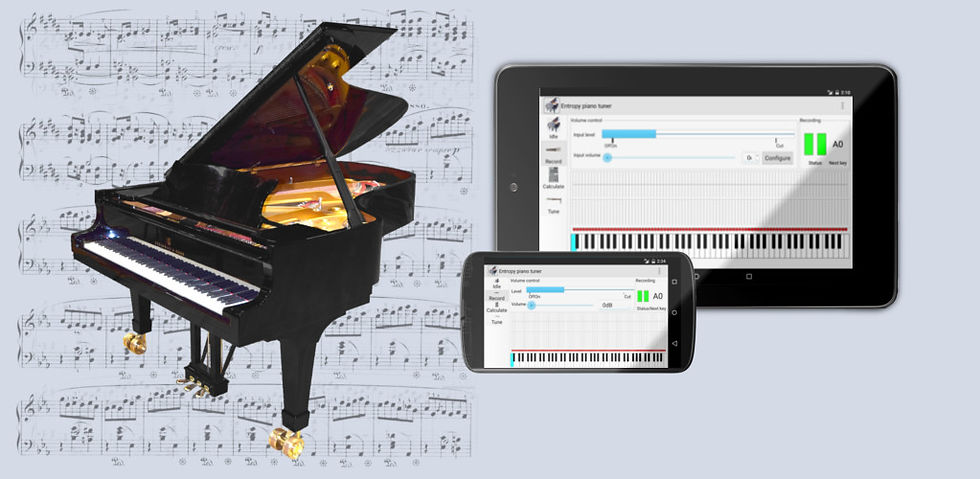
With this I decided to look online to see how common tuning with an app has become and I have had discussions across the trade, all agree with my take on this.
Having looked online thanks to algorithms etc increasingly I am now seeing posts on social media of tuners using apps claiming to be professional and watching their films its both scary and frustrating as they are basically charging to damage peoples pianos. In the USA theres a young man claiming to be a professional, he undertakes repairs as well and his techniques are simply awful, yet he says he is a "piano doctor", he burs the edges of the tuning pins with this technique on the lever and often the head he uses on this lever is too big, one film his repair on a sound board is very interesting and I spent two weeks undoing a similar repair a few years ago so I could do the correct repair. Hence I relate to him as "Dr Nick" from the Simpsons. He even goes to show a training video online, I watched it with pure horror. He is not the only one I have seen on the internet, but he has the largest presence on the internet as an "app tuner".
When visiting pianos I sold or had arranged to be moved overseas I have ended up doing more tunings in the area mainly for the customers friends and neighbours etc, then their friends and family etc who are impressed by my work as their local tuner used an app and "did not do a very good job".
You may rightly wonder why this is worthy of a blog, and thats very fair.
Tuning a piano is a great skill which honestly takes years to master, when you finish your training which used to take minimum 3 years on a night class, (just to to learn to tune nothing else) you then continue to learn as pianos behave very differently out in the wild than in an beautiful acoustic booth at the college.

In victorian times piano tuning was a highly regarded job hence only two professional people were permitted the honour of entering the front door of a home, your doctor (or medical professional) and your piano tuner, all other trades went through the back tradesman's entrance. Something I pointed out to a very rude lady twenty years ago who opened the front door to her lovely home on the Burhill Estate in Walton (where the racing driver Bruce McLaren lived) and said "good you are here, now go round the back as all tradesman go and use the proper tradesman's entrance as per tradition with the period of my home, now be quick its that way" this was said with a very patronising and rude attitude, I was tempted to play her the these tune from the 80s TV show "Keeping up Appearances" as she had an air Hyacinth Bucket about her tone. Honestly it was best not to say that to a piano historian. I was as polite as possible "you are certainly correct when this house was built all tradesmen went to the tradesman entrance, but a doctor and piano tuner was a highly regarded person and we were the only professionals to enter the front door, you have lovely carpets so I will remove my shoes here, or do you have covers as the other stately homes where I work and always enter the front doo provider?".... her piano was below par for such a home!
Hence I am finding it an insult that people feel that an app will be just as good.
The apps really came about during the pandemic when people could not get a piano tuner out and professionals started trying to tune the pianos themselves so some tuners and musicians worked with tech guys to build apps.
Back to tuning!

Every piano is different, as is every room the piano is placed in. You can have two identical pianos that left the factory on the same day, one placed in a large hall, the other in a small well furnished room in a house, both pianos will get tuned completely differently to get them sounding right due to the rooms they are in and the unique traits of the pianos. Put both pianos in the same room, again though they will both be in prefect tune and identical both pianos will have been tuned slightly differently to achieve that.
Why?
It is an annoyingly simple answer its due to the different acoustics of each room, and how each piano performs to these different acoustics, It is also down to the mateials in the piano. Yes a soundboard is made from Spruce, but each plank will still offer tiny differences in the acoustic quality it offers calling for the tiniest of change in how that piano gets tuned. An app will not pick this up, but and ear will. When using an app it is checking the pitch and nothing else, as amazing as microphones are becoming they still are not as good as the human ear and brain. In the sitautions I mentioned both pianos will sound much better and to any one else but a musician or tuner they will sound good but the truth is if played together they will also sound off and to a serious musician of any level they will sound bad especially in certain keys.
The other thing an app will not pick up on are whats called "false beats". Beats are created at the points when strings at different pitches no matter how small , even on the same pitch but a fraction out are meeting at the same point in the sound waves. These are what we are working with when tuning and again acoustics factor into how clear these are.
False beats (harmonics) are created on one wire when its damage so it acts as if it were two wires creating a beat within the wire, either by corrosion eating into the wire, surface dirt, a kink when being fitted or when twisted during fitting. A damaged bridge can also cause false beats. Apps and devices tend to read these are being a pure beat (or harmonic) so tell you the note is out of tune.
Older pianos also have a duller sound which apps will struggle with due to the impure sound always having a dull and short sound. This is often due to the material and design of the soundboard along with the way the board with fitted with the direction which then grain of the board was laid into the piano, also the type if wire and poor string scales used. An app will struggle with poor string scaling and on even older pianos iron strings not later tempered steel. The app WILL aid the tuning but the end result will sound out of tune.
The last thing that the apps etc fail to detect is that the bars on the metal frame cause interference to the notes either side of these bars.
In 2025 I decided to experiment and use an app to tune a piano in the workshop using the methods app tuners use. My findings were that the piano was as I would expect it to be after six months, so the tuning was ok and at end of year one at college course standard. I then tested it with other apps, all said it was out of tune giving different levels of detuning. So I tuned it again using the same methods via a different app and it was the same.
A bit of deeper research showed that the apps are using a in built comparison to where it thinks each pitch should be. So if a digital piano, piano in a studio, or and older piano etc was used even an intune piano is a set enviroment the apps are using these are references, hence they all say an in tune piano is wrong and when a piano is tuned with these they still say its wrong. In essence they are correct as an in tune piano is out of tune and as I said each piano is tuned very, very slightly differently to ensure its in tune within its setting etc.
Hence they are inferior compared to the trained human ear and the human brain.
HOWEVER there are some very good and well known electronic tuners that have existed for decades and trained qualified tuners use them purely as an aid or as a backup. These tuners are using a mixture of their high level rained ear and then the device purely as an aid, especially for difficult pianos, hard acoustics or a troublesome note. Some tuners will use them when they are feeling abit off or at the end of a long day when they are not at their best.

The way to spot a genuine trained tuner using a device/app is they will tune the centre of the piano first using a sequence of intervals then they will either go up the treble using octaves and an interval to check and or double octaves, then they will do the same either the bass or trebles. A non trained tuner will start at the bottom working to the treble playing one note at a time, as soon as you see this it's time to politely stop them!
Why does this matter?
When we tune your piano we are adjusting the overall tension on the frame and often we are stretching the wire adding tension, or we are reducing the tension on the wire. In doing this we are ever so lightly twisting the metal frame as we do so, hence a piano thats not been tuned for a while we ended up redoing notes as we do our checks with other notes, thirds, octaves, double octaves etc, then we may advice retuning in a few months to retune the piano on a schedule to stabilise the piano. So by starting in the middle initially setting up the tempered scale then working out either side minimises this twisting on the frame, therefore giving a far more stable piano tuning.
"App tuners" are not trained so have no true understanding of what tuning actually involes and its impact on the piano and without training do not do basic skills such as "bed" the pins properly neither do they know how to feel when a pin is twisting or actually turning in the wood hence not understanding they are twisting the pins they do not know how to reset the pin ensuring the string is fully set, some it seems think the twist is sufficient. All this skill comes with serious training under a true master and then improves with years of experience, the difference is minimal and its takes time to master the feel of the tuning pins.
The big companies Steinway, Bluthner, Bosendorfer, Bechstein and main piano dealers and restorers such Coach House Pianos, 1066, Sheargolds, Jacque Samuel's, Piano Restorations LTD and other highly reputable smaller firms and movers like Pianovan, Plaza Pianos etc all insist on using aural tuners. Some companies if you use a non trained tuner this will invalidate the warranty of the piano. BUT if you use a reputable trained tuner who uses an app or device as an assistant they are satisfied with this, though aural tuning is always preferred.
Personally I only use an app for the first tuning after fully re-stringing and then I will use it as a tuning fork as I can show the pianos owner where there piano is regarding pitch not just tell them.
So if you book a piano tuner and they set up an app pay attention. if they start in the middle and play two notes either for the entire tuning other than havong set the notes so putting in the other strings and play different notes to check the note after setting your piano is in good hands. If they only play one note at a time, they are not a trained tuner!

Comments