


Piano Restoration Versus Replacement Explained
A piano that has been part of family life for decades can be difficult to judge objectively. It may hold memories of lessons, celebrations and favourite pieces, yet its touch may be uneven, its tone tired and its tuning unreliable. Restoration versus replacement is therefore not simply a practical question. It is a decision about musical potential, long-term dependability and the place the instrument holds in your home.
The right answer begins with an honest assessment of the piano itself. Some instruments have a structure and character worth preserving; others have reached a point where further work cannot create the musical result their owner needs. A specialist examination should clarify that distinction with care, rather than assume that age alone makes a piano either a treasure or a lost cause.
What restoration can genuinely achieve
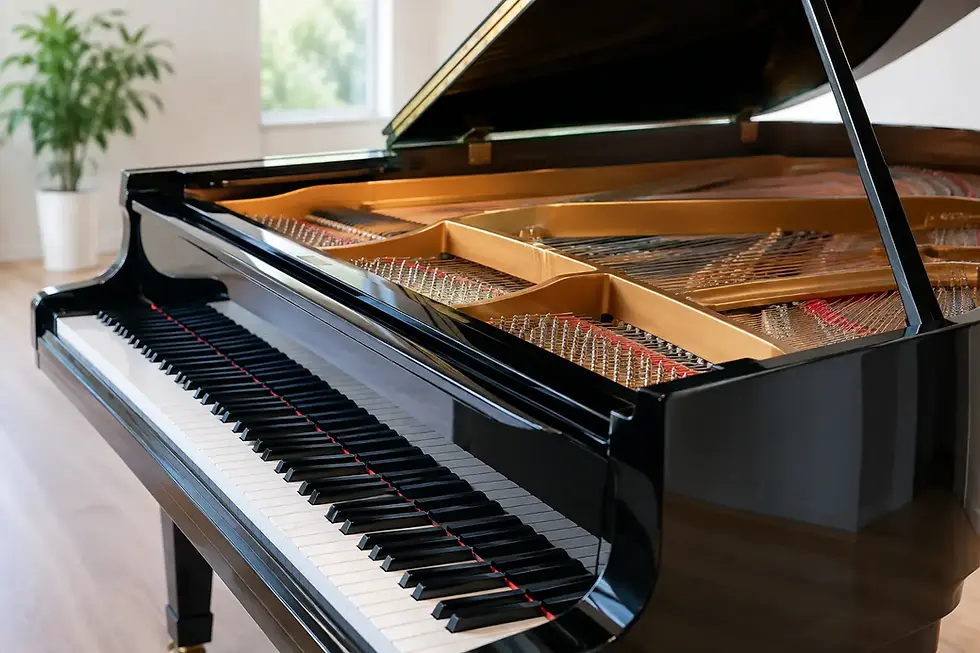
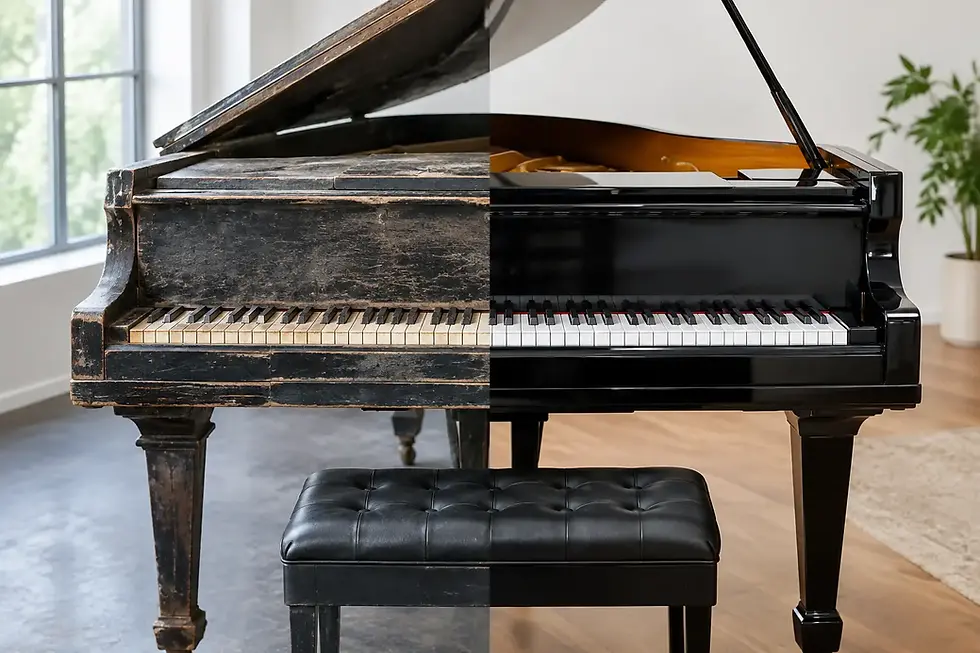
A proper piano restoration is much more than making an old instrument look presentable. It may involve work to the action, keyboard, strings, dampers, soundboard, pinblock, casework and pedals, according to the condition of the piano and the standard required. The aim is to restore responsive control, stability and an attractive musical voice while respecting the instrument's original design.
For the player, the most immediate change is often in the action. Worn felts, loose components and tired hammers can make a piano feel heavy, noisy or unpredictable. Careful regulation and repair can bring back an even touch, enabling quiet playing to remain controlled and stronger playing to have clarity rather than harshness. This matters greatly for a child learning good technique, a teacher demonstrating at home or an experienced pianist returning to regular practice.
The tonal result depends on far more than a tuning. A piano may be correctly tuned but still sound thin, brash or dull because the hammers have hardened, the strings have deteriorated or the instrument's internal adjustments have been neglected. Restoration can address many of these faults, but the work must be proportionate. Not every piano needs, or will benefit from, a full rebuild.
Cosmetic restoration also deserves sensible perspective. A polished case can transform how a piano sits in a room, particularly where it is a much-loved piece of furniture. Yet appearance should not take precedence over the instrument's musical foundations. A handsome cabinet cannot compensate for a compromised structure or an action that will not hold reliable adjustment.
Restoration versus replacement: the deciding factors
The most significant consideration is the piano's underlying build quality and structural health. The frame, soundboard, bridges and tuning-pin block form the foundation on which all other work depends. If these elements are sound, an instrument may offer an excellent basis for restoration. If they are severely compromised, extensive work can become uncertain in outcome, however carefully it is carried out.
Age is informative but not decisive. Some older pianos were made with fine materials and thoughtful craftsmanship, and can respond exceptionally well to expert work. Others were produced as modest domestic instruments and have limited musical potential from the outset. Equally, a newer piano may have suffered from poor environmental conditions, infrequent maintenance or heavy use.
The intended use should guide the decision. A family piano for occasional playing has different requirements from an instrument used every day by an advanced student. A school needs consistency, durability and dependable tuning stability. A venue requires an instrument that responds confidently under performance conditions. Replacement may be the more appropriate route when an existing piano cannot provide the touch, tonal range or reliability needed for its role.
Sentimental value is also entirely valid. An inherited piano may have a history that cannot be measured solely in technical terms. In such cases, restoration can be worthwhile even when another instrument might offer greater musical capability. The important thing is to be clear about the outcome: preserving a family instrument is different from creating a performance-standard piano, though in the best cases both aims can sit together.
When restoration is usually the stronger choice
Restoration is often appropriate where a well-made piano has a healthy structure, a pleasing inherent tone and an action that can be renewed or refined. It can be especially satisfying when the instrument suits the player physically and musically but has simply been allowed to deteriorate through time or lack of regular servicing.
It is also a thoughtful choice when the cabinet, scale design and musical character are distinctive. Many owners value the warmth and individuality of an older piano, provided its performance can be brought back to a dependable standard. Careful restoration retains that personality rather than replacing it with something unfamiliar.
When replacement deserves serious consideration
Replacement becomes sensible where the piano cannot maintain stable tuning, has major structural faults or offers a limited playing experience even after essential repairs. A very worn action can sometimes be rebuilt, but the wider condition of the instrument must support that investment of skill and time. If the soundboard, bridges or pinblock are failing, an apparently straightforward repair may not resolve the underlying problem.
It can also be the better choice when the needs of the household have changed. A beginner may have outgrown a modest piano and now need greater dynamic control. A growing family may need an instrument that supports regular lessons for more than one child. In these circumstances, a carefully selected refurbished piano can provide a reliable fresh start without sacrificing the character and substance that serious players value.
Replacement does not mean discarding an old piano without thought. A specialist can advise whether it has a future through restoration, another home, or responsible disposal. Honest advice is particularly important here, because owners deserve clarity rather than being encouraged towards work that will not serve their musical aims.
Why a hands-on assessment matters
Photographs and a short description rarely reveal enough. A piano assessment should include its tuning stability, internal condition, action wear, soundboard health, pedal function, tonal quality and the state of the cabinet. Just as importantly, the technician should listen to what the owner needs from the instrument.
A piano used in a dry, centrally heated room may show different symptoms from one kept in a damp outbuilding or beside a radiator. Changes in humidity affect wooden components, felt and tuning stability. Environmental history can explain why a piano has developed problems and whether those problems are likely to recur after repair.
At Runnymede Pianos, the purpose of this assessment is not to force a binary answer. In many cases there is a sensible middle course: targeted repairs, regulation and tuning can make a piano enjoyable and dependable for years, without undertaking a full restoration. This measured approach protects both the instrument and the owner's expectations.
Questions worth asking before you decide
Before committing to either route, ask what you want the piano to do over the next several years. Will it support regular tuition? Does it need to satisfy a capable adult player? Is it primarily a cherished family possession, or must it perform consistently in a teaching room or public setting?
Ask too whether the piano's present limitations are repairable symptoms or signs of a deeper problem. A technician should be able to explain this plainly: what can be improved, what will remain characteristic of the instrument, and what level of musical result is realistic. Technical language has its place, but the decision should always be understandable to the owner.
Finally, consider the practical setting. A well-restored piano still needs regular tuning, appropriate humidity and careful use. A replacement instrument also benefits from professional preparation and ongoing maintenance. Neither path removes the need for attentive care, but both can lead to years of rewarding playing when chosen for the right reasons.
A piano is at its best when its sound, touch and purpose are in balance. Whether that means renewing a familiar instrument or choosing another with greater potential, a considered specialist opinion gives you the confidence to let the music continue.

Comments