


When Should You Tune a School Piano for Pupils?
A school piano is rarely given the quiet, predictable life of a piano in a private sitting room. It may accompany assembly in the morning, support class singing after lunch, and be practised by several pupils before the day is over. To tune a school piano properly is therefore not simply a matter of correcting a few noticeably wrong notes. It is part of maintaining a dependable musical resource for pupils, staff and performances.
When a piano is consistently in tune, children hear accurate pitch, teachers can lead with confidence, and rehearsals do not begin with an unnecessary obstacle. Equally, a tuning visit is an opportunity to assess the instrument's general condition: its touch, pedal function, stability and any developing faults that deserve attention before they become disruptive.
How often should a school piano be tuned?
For most actively used school pianos, tuning twice a year is a sound starting point. This usually reflects the change between heating seasons, when shifts in temperature and humidity can alter the tension of the strings and the condition of the soundboard.
Some instruments need more frequent attention. A piano used every day for lessons, choirs, examinations or regular concerts may benefit from three tunings a year, particularly if it stands in a hall or music room with variable conditions. A piano that is played only occasionally, kept in a stable room and has held its pitch well may require less intervention. The right schedule depends on the instrument, its environment and its musical workload.
It is tempting to wait until the piano sounds obviously out of tune. By then, however, it may have slipped substantially below concert pitch and need more than a straightforward tuning appointment to return it safely and evenly. Regular care is gentler on the piano and gives pupils a much more reliable instrument on which to develop their ear.
Why school pianos go out of tune
Every acoustic piano responds to its surroundings. Its strings exert considerable tension, while the wooden structure that supports them expands and contracts as moisture levels rise and fall. Central heating, open windows, radiators, direct sunlight and a busy multi-purpose hall can all create conditions that challenge tuning stability.
The practical realities of school life add further pressure. A piano may be moved for a production, placed close to exterior doors for an event, or left unused during holidays before being asked to support a concert at short notice. Frequent playing does not itself make a piano go out of tune in the way humidity does, but heavy use quickly reveals a piano that is already unstable or mechanically tired.
A good technician considers these factors before beginning work. If the piano has fallen well below pitch, the strings may need to be raised gradually and carefully. Attempting to force a neglected instrument into tune in one aggressive step risks an uneven result and places unnecessary strain on strings and structure.
Pitch raising and tuning are not always the same job
A piano at standard pitch is tuned by making fine adjustments across the full compass of the keyboard. If it is significantly flat, a pitch correction may be required first. As tension is restored to one group of strings, neighbouring strings are affected, so a second fine tuning is often needed to achieve the stable, musical result a school requires.
This distinction matters when planning around a concert or examination. An instrument that has not been maintained for several years should not be left until the day before a performance. Arranging an assessment well ahead of time allows for the right work to be carried out without compromising the occasion.
What a professional school piano tuning should include
The audible result matters, but it is not the only measure of careful work. A professional tuner listens for the relationship between notes and sets the temperament that allows the piano to sound convincing in every key. The process involves far more than matching individual notes to an electronic reference.
During the visit, an experienced technician should also be alert to faults that affect daily use. Sticky or sluggish keys, uneven touch, lost motion in the action, noisy pedals, loose fittings and damaged string ends can make playing frustrating even when the tuning itself is accurate. Not every issue needs immediate repair, but a school should have a clear picture of what requires monitoring and what may interfere with teaching or performance.
The piano's action deserves particular attention in a teaching environment. A pupil learning control needs keys that respond consistently. If some notes are markedly heavier, fail to repeat quickly or produce an unreliable sound, the instrument can encourage poor habits and undermine confidence. Small adjustments made at the appropriate time can preserve both playability and the life of the mechanism.
Preparing the room before the tuner arrives
There is no need to make elaborate preparations, but a few simple steps make the appointment more productive. Ensure the piano is accessible, the keyboard is clear, and the room is reasonably quiet for the duration of the work. If the piano is in a hall, it is helpful to avoid scheduling the visit during PE, assembly or a particularly noisy lesson nearby.
The piano should be closed and protected when not in use, but avoid placing drinks, display materials or heavy objects on its lid. If it has been moved recently, mention this to the technician. The same applies to any keys or pedals that staff have noticed behaving differently. Those observations are valuable, especially where several people use the instrument throughout the week.
Where possible, keep the piano away from radiators, fires, external doors and strong sunlight. A stable internal wall is generally a better position than an outside wall. In some school buildings, the ideal location is not practical, but even modest improvements in placement and heating habits can make a meaningful difference to tuning stability.
Planning tuning around the school calendar
The best time to tune a school piano is not always the quietest week of the year. It is usually wiser to plan around musical use. A tuning shortly before a concert, recital, open evening or examination period gives performers the benefit of a settled instrument, provided it has been maintained regularly beforehand.
For annual events, place the piano's care in the same calendar as room bookings, music hire and rehearsal dates. This prevents a familiar last-minute problem: discovering an awkward bass note, a sticking key or a noticeably flat unison during the first full rehearsal. A school piano supports a great deal of communal music-making, and it should be treated as part of the performance preparation rather than an afterthought.
Holiday periods can also be useful for repairs that require more time than a normal tuning appointment. Yet the piano should be checked again before it returns to heavy use, especially after a building has been closed, heated differently or subject to maintenance works.
When tuning alone will not solve the problem
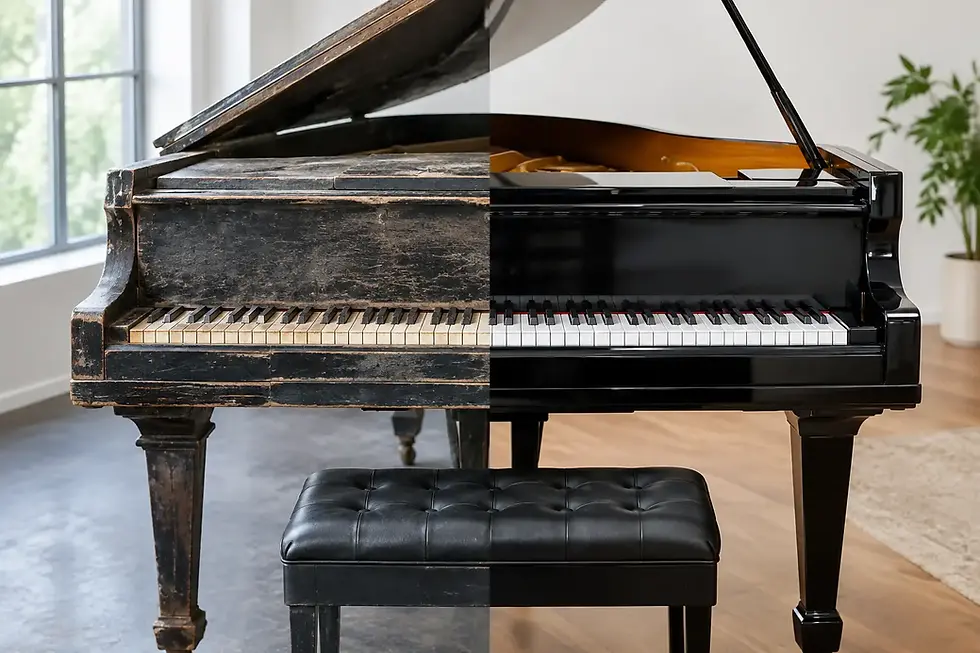
If a piano will not hold its tuning, has widespread mechanical faults or produces a weak, uneven tone, further attention may be needed. This does not automatically mean the instrument has reached the end of its useful life. Many school pianos respond very well to careful regulation, repair or restoration, depending on their make, condition and intended role.
The key is honest assessment. A piano used for beginner class work has different requirements from one expected to accompany advanced pupils, visiting musicians or public performances. In both cases, the aim should be an instrument that is safe, dependable and musically rewarding, with maintenance chosen to give the school lasting value rather than a short-lived cosmetic improvement.
For schools in Woking, Guildford, Godalming and the surrounding area, Runnymede Pianos can provide the specialist judgement that helps staff make sensible decisions about tuning, repair and ongoing care.
A well-maintained school piano quietly raises the standard of every song, lesson and rehearsal played around it. Give it regular expert attention, and pupils will meet an instrument that invites them to listen closely, play freely and take music seriously.

Comments