


Live Piano Music for Restaurant Ambience
A restaurant can have excellent food, thoughtful service and a handsome dining room, yet still feel slightly unfinished once the room begins to fill. The right live piano music for restaurant service changes that feeling without demanding attention from every table. It gives the room a sense of occasion, softens the practical noises of service, and helps guests settle into the pace of the evening.
That effect is not achieved simply by placing a pianist beside a piano. The instrument, repertoire, timing and performance style all need to suit the character of the venue. When these details are handled with care, live music becomes part of the hospitality rather than an interruption to it.
Why live piano music works in a restaurant
Piano music has an unusual ability to occupy a room gently. Unlike amplified entertainment, it can be heard without forcing conversation upwards. A skilled pianist can read the atmosphere in real time, adjusting volume, tempo and repertoire as the dining room changes from early arrivals to a busy main service, then into a more relaxed late evening.
There is also a practical benefit. Every restaurant has moments of transition: guests arriving before their table is ready, a brief pause between courses, or a lull after a larger party leaves. Live piano can make these moments feel deliberate and comfortable. Rather than noticing the wait or the change in energy, guests remain immersed in the experience.
For independent restaurants, hotels and private members' venues, this can be a meaningful part of the identity of the house. It signals care, confidence and an intention to offer more than a meal. The music should never feel like a grand gesture for its own sake; it should support the standard of welcome the venue already aims to provide.
Begin with the dining experience, not the playlist
The first question is not, “What songs should be played?” It is, “How should guests feel here?” A candlelit restaurant with attentive table service calls for something different from a lively all-day brasserie or a hotel lounge serving afternoon tea.
A refined evening service may suit familiar standards, jazz-influenced arrangements, restrained classical pieces and well-chosen popular melodies. The strongest choices are recognisable enough to create warmth, but sufficiently understated that they do not turn every table into an audience. In a more informal setting, the repertoire can be brighter and more rhythmic, provided it remains musically polished and appropriately measured.
Requests deserve thoughtful handling. Guests often enjoy hearing a favourite tune, particularly for an anniversary or special celebration. However, a pianist should retain the judgement to adapt a request to the room. A piece that works beautifully at a wedding reception may be too assertive during a quiet dinner service. Musical sensitivity is as valuable as technical ability.
Volume is part of the service
The most common mistake with restaurant music is treating volume as a fixed setting. It is not. A full dining room absorbs sound differently from an almost empty one, while hard floors, glass and high ceilings can quickly make even a modest performance feel too present.
The pianist should be able to play with a controlled touch and respond to the acoustics. The music needs enough presence to reach the room, but not so much that guests lean forward to hear one another. In many cases, the best feedback is that diners remember the atmosphere vividly but cannot recall a single moment when conversation was difficult.
A sound check before service is worthwhile, especially where a digital piano, discreet amplification or an unfamiliar room is involved. It should be assessed from the tables, not just from the keyboard. What sounds balanced to the performer may travel very differently across the restaurant.
Choosing the right piano for the setting
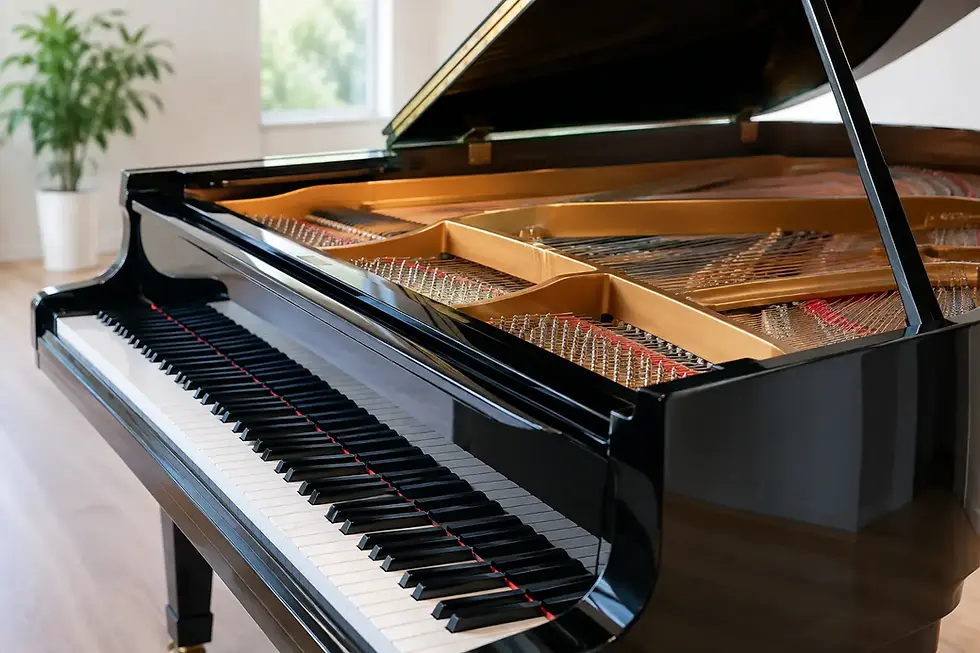
An acoustic piano gives a dining room depth, character and visual appeal that are difficult to imitate. Its tone has natural variation, and its cabinet can become a genuine feature of the room. But it also requires appropriate conditions: stable temperature, sensible humidity, regular expert care and sufficient space for both instrument and performer.
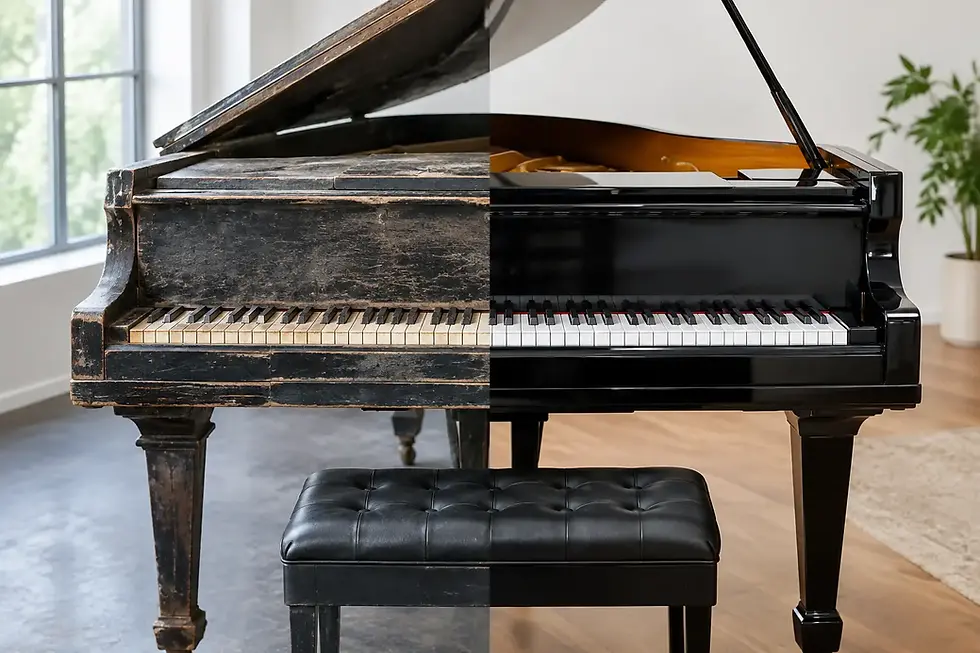
For venues with a permanent acoustic piano, maintenance should be considered part of the guest experience. A piano that is out of tune, uneven in touch or mechanically unreliable will undermine the effect of even a fine player. Regular tuning and prompt attention to small faults preserve the instrument's sound and ensure it is ready when it matters.
A carefully selected digital piano can be the better solution where space is limited, the instrument must be moved for functions, or control over volume is essential. The distinction is not simply acoustic versus digital. Touch quality, tone, speaker placement, appearance and reliability all affect the result. A poor instrument encourages a harsh sound and limits musical expression; a well-chosen one can serve a restaurant with great professionalism.
For occasional events, hiring an appropriate instrument can avoid the compromise of relying on whatever happens to be available. The piano should be delivered, positioned securely, checked before performance and collected with minimal disruption to normal trading.
Positioning affects both sound and hospitality
The pianist needs to be visible enough to feel connected to the room, but not placed where staff and guests must constantly navigate around the instrument. A corner of the main dining area, a lounge threshold or a reception-adjacent space can work well, depending on the layout.
Avoid positioning the piano beside the bar's loudest service point, a kitchen door or an entrance exposed to draughts. These locations create problems for both performance and piano care. Equally, placing the player too far away can make the music feel detached, like it belongs to another part of the building.
Consider sightlines as well as sound. Guests should be able to appreciate the presence of a live musician without feeling that they are being watched or expected to respond. The performer is there to animate the room with quiet assurance.
Planning a dependable live piano music for restaurant service
Reliability is central to hospitality. A booking should establish the arrival time, performance periods, breaks, access arrangements, dress expectations, available power where needed, and the person responsible for coordinating on the day. These details are unglamorous, but they allow the performance to begin calmly and professionally.
Timing is equally important. Some venues prefer music from the moment doors open, creating an immediate sense of welcome. Others benefit more from a later start, once enough diners are seated to create an atmosphere. Split sets often work well for a longer service, allowing natural pauses while maintaining consistency across the evening.
The musician should understand the difference between performing in a concert setting and performing for diners. Restaurant playing calls for discipline: no extended spoken introductions, no abrupt changes in mood, and no repertoire chosen simply to display virtuosity. Technical accomplishment matters, but judgement matters more.
At Runnymede Pianos, this perspective comes from treating the piano as both a musical instrument and a working part of a venue. The instrument must sound its best, feel dependable under the hands, and suit the practical demands of the room.
When live music may not be the right choice
There are occasions when recorded background music is more suitable. A very small room with closely packed tables may not have enough acoustic space for a pianist, however sensitive the performance. A restaurant built around high-energy conversation, frequent celebrations and rapid turnover may also find that live piano creates a mismatch with its natural character.
It may also be better to reserve live music for particular services: Friday and Saturday evenings, Sunday lunch, seasonal events or private dining occasions. This can give the entertainment genuine purpose rather than making it feel routine. The right frequency depends on the restaurant's audience, style of service and the experience it wants guests to anticipate.
Where a venue is unsure, a limited trial across a few comparable services can be revealing. Observe not only whether guests compliment the music, but whether the room feels more settled, whether staff can communicate easily, and whether the pace of the evening remains comfortable.
A fine restaurant is made from details guests may not consciously separate: the warmth of the greeting, the weight of the cutlery, the timing of a course, the sound in the room. Carefully chosen piano music belongs among those details. When it is played with restraint on an instrument properly prepared for the setting, it gives guests something increasingly rare: an evening that feels composed from the moment they arrive.

Comments