


What a Piano Technician for Schools Should Do
A school piano is rarely used gently. It accompanies tentative first scales, daily classroom singing, examinations, rehearsals and performances, often with many different hands at the keyboard in a single week. A piano technician for schools must therefore do more than bring the instrument back to concert pitch. The work is about making the piano reliable, responsive and fit for the musical life of the school.
For a music department, an instrument that sounds poor or has an unreliable action can gradually limit what teachers attempt and what pupils are able to achieve. Conversely, a well-maintained piano encourages better listening, more confident playing and productive rehearsal time. It becomes a dependable working instrument rather than another item on the premises list requiring attention.
Why school pianos need a different approach
A piano in a private home may be played for an hour or two each week. In a school, the same instrument can be used every day, sometimes in rooms where temperature and humidity change substantially between term time, holidays and performances. Open windows, heating schedules, moving furniture and frequent use all affect tuning stability, regulation and the general condition of the instrument.
There is also a practical distinction between a piano that is merely playable and one that supports musical teaching. A sticking note, a pedal that does not work cleanly, uneven key response or a harsh, unfocused tone may seem minor in isolation. During a lesson or choir rehearsal, however, these faults interrupt concentration and make accompaniment less secure. For pupils learning to play, an inconsistent touch can also make good technique harder to develop.
The right technician will consider how each piano is used. A quiet practice room instrument has different demands from the piano in a hall used for assemblies, concerts and visiting performers. A thoughtful service plan reflects those differences rather than treating every instrument as identical.
What a piano technician for schools should assess
Tuning is the most familiar part of piano care, but it is only one element of a proper visit. Before tuning, a technician should listen to the instrument and assess its overall condition. If the action is not functioning correctly, a precise tuning alone will not resolve the experience of playing it.
Tuning for musical use, not simply a number
Pitch changes naturally as the piano responds to its environment. Regular tuning keeps the instrument near its correct pitch and, just as importantly, keeps the tuning stable enough for lessons and ensemble work. A piano that has been neglected for a long period may need careful pitch correction over more than one visit before it can hold securely.
For schools, timing matters. Tuning immediately before a concert, examination period or major production can be sensible, but it should not be the only attention the piano receives. A planned programme across the academic year is usually more effective, particularly for heavily used instruments.
Action regulation and minor repairs
The action is the intricate mechanism behind the keys. It translates a player’s touch into sound, and small changes in its adjustment can have a marked effect on control. Keys may become uneven, repetition may feel sluggish, or hammers may not return as they should. These are common issues in busy environments and can often be addressed through regulation and minor repair work.
A technician should also check pedals, loose parts, keytops, hinges and music desks. Early attention to a worn component can prevent disruption later, especially where an instrument is central to a school concert or production.
Tone and voicing
Tone is not a luxury reserved for recital rooms. A piano with an excessively bright or percussive sound can make sustained teaching tiring, while one that is dull or weak may struggle to support a choir. Voicing involves careful work on the hammers to improve the quality and balance of the tone without compromising clarity.
Not every school piano needs the same tonal character. A hall instrument may need projection and presence; a smaller teaching-room piano may benefit from a warmer, more contained sound. The technician’s role is to advise on what will serve the room and its musical purpose best.
Building a sensible maintenance plan
The best arrangement is usually preventative rather than reactive. Waiting until several keys fail or a performance is imminent tends to create unnecessary pressure for staff and pupils alike. A technician who understands school use can help create a practical schedule around term dates, concerts and examinations.
A useful plan begins with an accurate condition report. This identifies which instruments are dependable, which need routine adjustment and which may require more substantial attention in due course. It also helps a school make informed decisions rather than responding to faults one at a time.
The frequency of visits depends on the piano’s use, its location and its condition. A heavily used piano in a hall may require more regular attention than one in a supervised teaching studio. Equally, a piano in an unstable environment may need careful monitoring even if it is not played constantly. There is no single timetable that suits every school.
It is worth keeping a simple record of servicing, faults and changes in use. If a piano has been moved, exposed to building works or placed near a radiator, that information gives the technician valuable context. Music staff need not diagnose the problem, but noting when an issue began can make a repair more efficient.
Choosing the right technician
Schools benefit from working with a named specialist who can become familiar with their instruments over time. This continuity matters. A technician who knows the history of a piano can spot gradual changes, anticipate maintenance and give clear advice about what is necessary now and what can be planned for later.
Look for professional training, established technical experience and a musician’s understanding of how a piano needs to perform in real teaching situations. Good communication is equally valuable. Staff should receive a straightforward explanation of the piano’s condition, the work carried out and any recommendations, without unnecessary jargon or pressure.
Reliability around the school calendar is another consideration. Access arrangements, safeguarding procedures and the need to work around lessons all require care and professionalism. An experienced school technician will respect the rhythm of the day, work considerately in occupied buildings and plan visits where possible to minimise disruption.
For schools in Woking, Guildford, Godalming and the surrounding area, Runnymede Pianos provides expert piano care with this broader musical context in mind. The aim is not simply to complete a service visit, but to ensure each instrument remains a trusted part of the school’s musical provision.
When repair, restoration or replacement becomes the question
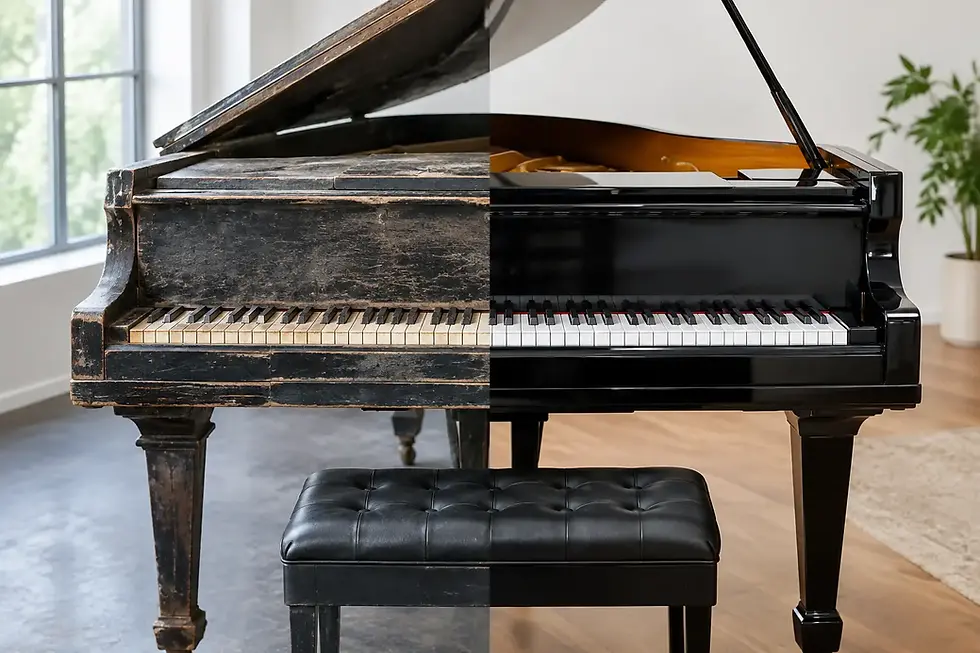
Some school pianos have served for decades and carry real history, but age alone does not determine whether an instrument should be retained. The key questions are whether it can be made musically satisfying, structurally reliable and suitable for its intended use. In some cases, careful repair and restoration offer excellent value in musical terms. In others, recurring faults or serious wear may mean that a different instrument is the more sensible long-term choice.
A trustworthy technician will explain the options plainly. There may be a place for repairs that extend useful life, for restoration of a piano with genuine potential, or for sourcing a carefully selected replacement that better suits the room. The recommendation should be based on the instrument, the school’s needs and the standard of musical use expected.
The effect pupils notice
Pupils may not describe action regulation or voicing, but they notice the result. They feel whether the keys respond predictably. They hear whether chords blend and melodies sing. Accompanists can focus on the ensemble rather than compensating for an unreliable pedal or hesitant note.
That is why piano maintenance deserves a place in a school’s wider commitment to music. Expert care protects the instrument, but it also protects rehearsal time, teaching standards and the confidence of young musicians. A piano kept in good order quietly does its job every day - and gives pupils a better reason to keep playing.

Comments